July 27, 2026
The Safari Stop-Over: Luxury Safari Magazine Pauses at Lilayi Lodge, Zambia
We found her just as the light was going — a baby giraffe, born only five days earlier, standing close against her mother in grass tall enough, at this time of year, to nearly swallow her whole. Andrew Schachingwebe, our guide, had been searching for a while, patient about it, certain she was out there somewhere even as every shape around us dissolved into the same flat gold. When we finally found them, nobody said much. We just watched them be for a while — the mother grazing, the baby tucked close against her, both of them entirely unbothered by the two of us sitting very still in the vehicle a few metres away. Then the light dropped properly, and we pulled away for a sundowner and let the sky do the rest.
Three days at Lilayi, and that’s the evening I keep coming back to not because nothing else happened — I covered thirteen kilometres of mud the same week I’d only meant to run five, and came back from that particular adventure looking like I’d lost a fight. But the giraffe is the one that stayed.
It was the kind of moment that makes you forget, briefly, that you arrived at Lilayi for entirely practical reasons.
Lilayi Lodge sits forty-five minutes outside Lusaka, on 650 hectares of private reserve that the Miller family has been stewarding since the early twentieth century. It became a cattle farm first, then gradually a private reserve as the family began introducing animals from larger national parks, before opening to guests in 1991. No predators, which sounds like a limitation and turns out to be the opposite: you can walk and run through the reserve freely, zebra and antelope and that shy giraffe population doing their own thing entirely unbothered by yours.
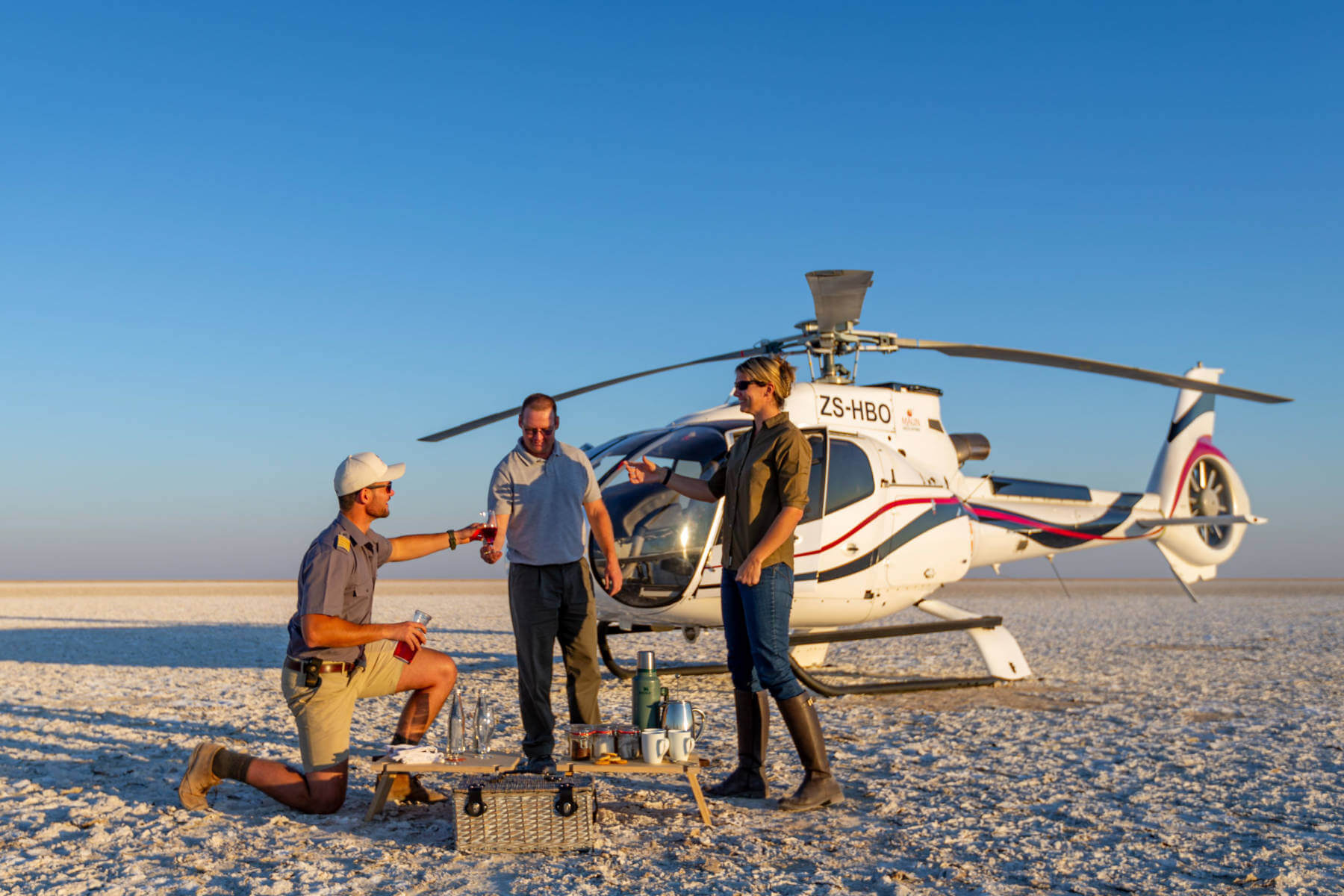
What Lilayi does, and does with real conviction, is solve a problem almost nobody plans for: the gap on either side of safari. I’ve been on enough trips now to know how genuinely tiring the bush actually is — up before dawn, out until dark, days of real intensity that are wonderful and properly exhausting in equal measure — and almost no itinerary accounts for the jet lag on one end or the depletion on the other. Lilayi exists specifically to absorb that gap. About forty-five minutes by road from Lusaka’s Kenneth Kaunda International Airport, or six minutes by light aircraft from the lodge’s own private airstrip – a pool, a spa, decent internet, and a kind of unhurried decompression that you don’t know you need until you’re sitting in it. First stop or last stop, it does the job either way.
It isn’t trying to be a five-star bush camp, and it would be the wrong comparison to make. What it offers instead is something more grounding — a place large enough to properly stretch your legs in, a kitchen and conservation programme both visibly still being built and refined, and a level of staff warmth that ends up mattering more than polish ever would. You notice the effort before you notice anything that hasn’t quite caught up yet, and by the end of a stay, the effort is what you remember.
I want to tell you about the mud, because it’s the story I keep telling people back home, and because of what happened afterwards.
I’d asked about a trail run that morning — five and a half kilometres, one of three signed routes through the reserve, about forty-five minutes. I am, generally, capable of following a path. Somewhere around the kilometre-and-a-half mark I took a wrong turn, decided turning back felt unnecessary, and two hours later had covered thirteen kilometres, fallen over more times than I want to count, lost an AirPod somewhere in the reserve I will never see again, and arrived back at the lodge in a condition that can only be described as a state. My shoes were completely drenched and beyond immediate use. My hamstring was already registering a formal complaint.
The team did not blink. My running kit was taken away and washed, shoes included, while I sat with a cold drink trying to work out which direction I’d actually come from. When I mentioned the hamstring, someone disappeared and returned having arranged a massage, delivered to my room within the hour — properly good, the therapist clearly excellent, exactly what was needed. None of it felt like service for service’s sake. It felt like a group of people who had quietly decided their job was to make sure I left in better shape than I arrived, regardless of how I’d managed to undo myself in between.
The wine tasting on our first evening is worth a proper mention. The Lilayi Wine Company is, by most accounts, the only experience of its kind in Zambia — a partnership with three South African winemakers — David Finlayson, Richard Kershaw and Dalla Cia — who together produce the Lilayi Wine Collection, since the local climate won’t support a vineyard of its own. Bruce Simbeye, our host for the tasting, talked us through each pour with real knowledge, the evening air cooling down around us as the heat of the day finally let go. It’s a smart, well-executed thing, and a genuinely lovely way to start a stay designed, from the first evening, to slow you down rather than rush you toward the next activity.
The conservation work runs considerably deeper than I expected. Lilayi shares a boundary with Lusaka National Park and has worked closely with Game Rangers International for years — for a long time running an elephant nursery for orphaned and rescued animals, since relocated to a purpose-built facility within the national park itself as that partnership has matured. The two organisations are now in discussions about opening traversal rights between the properties. Beyond the reserve itself, the team is actively exploring expansion into other areas of Zambia — further evidence that Lilayi’s conservation ambitions extend well beyond their own fence line.
Closer to home, the reserve has tagged more than 156 indigenous tree species, cleared every alien plant from its land, and feeds none of its animals — numbers managed through an annual game capture and exchange programme with other reserves rather than any artificial feeding. The Tree Safari, which I did on our second afternoon, is a self-guided walk built around that same cataloguing project, started by proprietor Ian Miller and botanist Nicholas Wightman, during the quieter Covid years when they’d been talking about doing it for ages and finally had the time. It’s password-protected on the lodge’s website — deliberately low-key, deliberately niche — and you come back from it with something real, even if you only set out for a walk in the afternoon sun.
The food has a story behind it that surprised me. Scott Leslie, the General Manager, brought his father Chris Leslie back to the lodge — Chris trained at the Savoy in London alongside his brothers before building successful restaurants in Cape Town and eventually stepping back from the industry to retire. Scott brought him back, a few months at a time, specifically to rebuild the kitchen from scratch — because there’s no real culinary school infrastructure in Zambia to draw from the way there is in South Africa. Every chef in that kitchen started somewhere else entirely: a gardener, a security guard. They begin washing pots, move into baking, then the cold section, and the ones who show real talent get pulled aside and trained up properly over two or three years. It’s an open joke in Lusaka hospitality that once a Lilayi chef gets good, somebody else tries to poach them. Which says everything about how well the system works.
It shows on the plate. Greens and herbs from the family’s own organic farm, eggs from a local producer, beef and venison from the reserve’s own game capture programme, vegetables from smaller nearby growers they support directly. The crayfish — an invasive species taking over the local waterways, sourced through a partnership with the Wildlife Crime Prevention agency that also supplies the lodge’s legal bush meat — was the standout dish of the whole stay. Sustainable eating that also happens to taste exceptional.
We left early the next morning, the reserve still pale with mist, Andrew waving us off from the gate. Three days at Lilayi is not, on paper, the most dramatic stop on a Zambian itinerary. It’s also exactly the stop you didn’t know you needed — somewhere to properly land, before or after the part of the trip everyone else talks about.
W: Lilayi Lodge
Written by Emma Blunt for Luxury Safari Magazine